For short needs — an event, a season, a project under about a year — hire is usually cheaper and simpler. For continuous use beyond roughly 12–24 months, purchase typically becomes significantly cheaper over the life of the structure: hire fees keep accruing forever, while a purchased structure is paid once and retains residual value.
Australia's temporary structure market is dominated by hire companies, so hire is the default most buyers are offered. It is the right answer surprisingly rarely. Here is how to find your crossover point.
The crossover logic
Hire pricing is built for the hirer's fleet economics: the structure must earn its capital cost back across multiple rentals, plus margin, plus the costs of repeated transport, assembly and refurbishment. That works brilliantly for a three-week event. Stretch the same pricing over years of continuous use and you are paying for the structure several times over without ever acquiring it.
| Duration of need | Usually cheapest | Why |
|---|---|---|
| Days – 6 months | Hire | No capital, no ownership admin, gone when done |
| 6 – 24 months | Case by case | Depends on spec, renewal risk and capital position |
| 2 – 5 years | Buy | Cumulative hire typically exceeds purchase price within this window |
| 5+ years / repeat seasonal | Buy | Ownership plus redeployment beats any rental structure |
A worked example
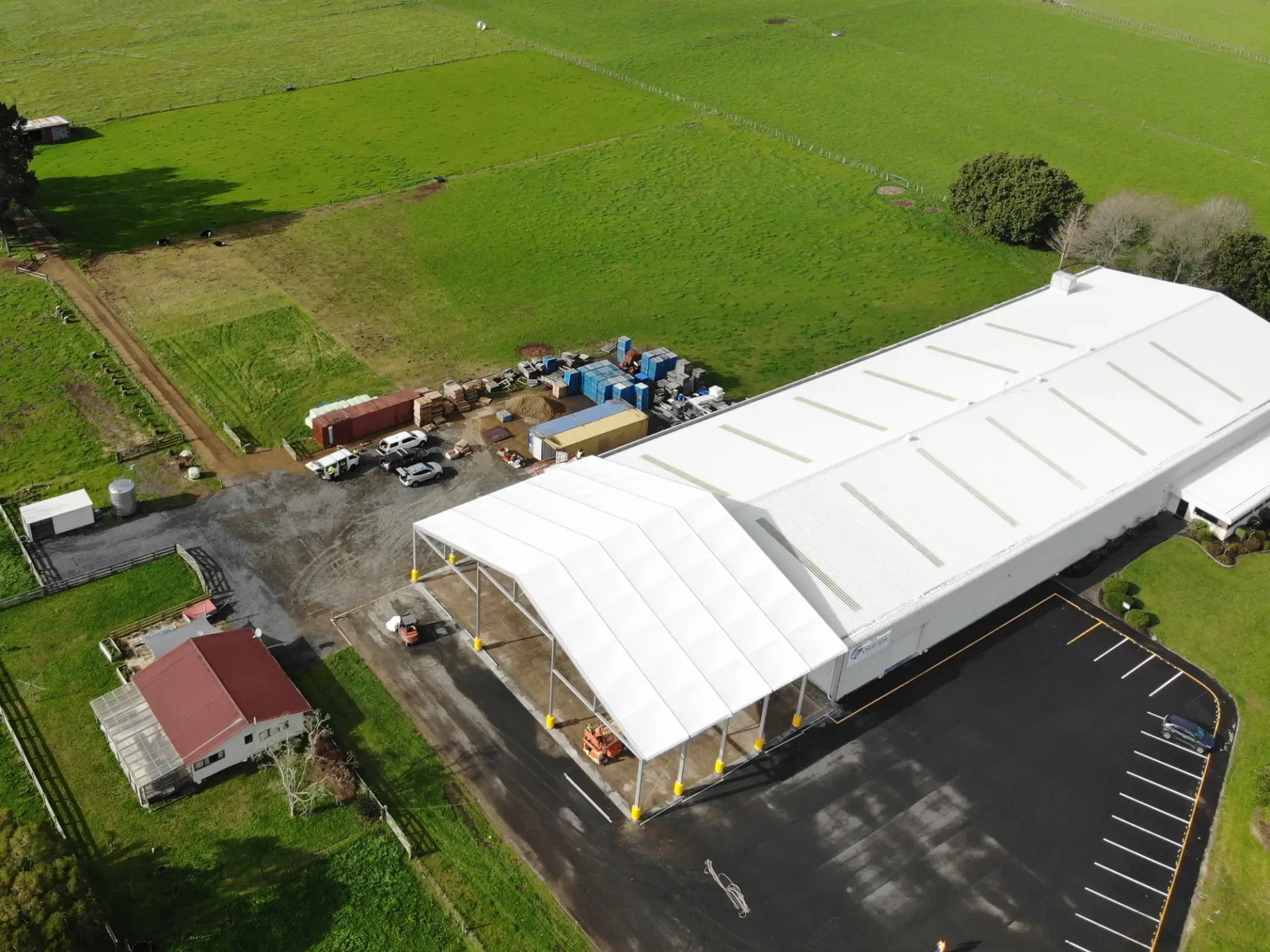
Take a 1,000 m² insulated clear-span warehouse. Suppose hire lands around $20–$30/m² per month once transport and assembly amortise — roughly $240,000–$360,000 a year. A comparable purchased structure, supplied and installed, might cost in the order of $450–$900/m² (see the cost guide) — $450,000–$900,000 once. On those indicative numbers the purchase pays for itself somewhere between the second and third year, and every year after that carries a substantially lower annualised cost — while the hired alternative keeps invoicing indefinitely. The exact crossover moves with specification and rates, but the shape of the curve never changes.
Searching for "long term marquee hire"?
That search itself is usually the answer. If the need is long enough that you are qualifying hire terms by the year, the crossover point has almost certainly been passed — long-term marquee hire is the highest-cost way to occupy a structure, because you carry ownership-length commitment with none of the ownership economics. Price the purchase before you sign the term; PCS can also supply assessed used marquees where capital is the constraint.
What the hire quote doesn't show
- Renewal risk. Each term end reprices the roof over your operation — and removing a structure mid-operation is not a real negotiating option.
- Residual value. A purchased structure remains an asset: redeployable to the next site, saleable, or expandable with extra bays. Hire leaves nothing.
- Depreciation and tax treatment. Owned structures are commonly treated as depreciable plant — model it with your accountant; it materially improves the ownership case.
- Specification ceiling. Hire fleets standardise. Ownership opens the full range — insulated hard walls, glazing, multi-storey, integrated services — specified once for your exact duty.
- Repeat seasonal use. A venue that hires every season is the clearest buy signal in the market: same structure, same site, new invoice every year.
When hire is genuinely right
Honest answer: one-off events, project surges under a year, and trials where the requirement itself is uncertain. PCS's focus is the other side of the line — ownership-grade, long-term structures — and part of our consultation is telling you plainly which side your project sits on. Some projects start on hire while budgets clear, then convert; long-term arrangements can be structured to suit. The decision framework across all three categories — temporary, semi-permanent, permanent — is in how to choose.