Both build genuine clear-span structures, and the best manufacturers in each region are excellent. The practical differences are engineering documentation depth, standard profile weights, consistency between factories, price and lead time. PCS recommends European-made systems first for long-term structures — the cost per year of service life is comparable — and sources, vets and certifies structures from either origin to the same Australian Standards.
PCS supplies structures from both regions, so we have no interest in caricature. The leading Chinese manufacturers are serious global businesses; the leading European manufacturers set the benchmark the industry measures itself against. What a buyer needs is not a verdict on two countries but an understanding of where the real differences sit — and where they don't.
Where the two are more alike than the marketing suggests
- Materials. Quality manufacturers in both regions extrude 6-series T6 aluminium, hot-dip galvanise steel components, and clad with PVC-coated polyester membranes.
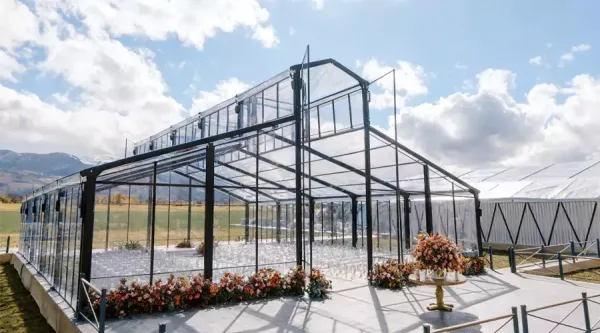
- Form. The A-frame clear-span portal, modular bays, cassette floors and glass-wall options are global vocabulary. Leading Chinese makers span to 80 m; leading European makers cover the same working range.
- Track record. Top-tier Chinese structures stand at international sporting events and exhibitions across 130+ export markets, under ISO 9001 quality systems. This is not an emerging industry finding its feet.
Where the genuine differences sit
- Engineering documentation. The decisive one for Australia. European systems grow out of European structural codes and typically ship with deep, site-adaptable engineering documentation — and documentation is what certification and council approval run on. Good Chinese manufacturers provide documentation too; the depth and adaptability vary more, and thin paperwork becomes your problem at approval time, not the factory's.
- Standard ratings vs your site. Catalogue wind ratings — commonly around 100 km/h for standard Chinese-made structures — describe a reference design, not your site. AS 1170 regional wind requirements in Australia frequently demand more. This cuts both ways: any imported structure, from either region, must be engineered for the site it will stand on. The difference is how much re-engineering the standard system needs to get there.
- Section weights and detailing. European standard profiles tend to run heavier for a given span, with correspondingly higher standard load ratings and premium hardware and membrane partners. Comparable heavy-duty specifications exist from top Chinese makers — but as options to specify, not defaults to assume.
- Consistency. The spread between the best and worst European factories is narrow. The spread in China is wide: the top tier is genuinely excellent, the bottom tier is where the horror stories come from. Country of origin tells you little; the specific factory tells you everything.
- Price and lead time. Chinese systems are meaningfully cheaper upfront and often faster to ship. European systems carry a premium and longer manufacture — see real timelines — which buys design life and documentation.
The comparison at a glance
| Factor | European-made | Chinese-made (top tier) |
|---|---|---|
| Standard engineering documentation | Deep, site-adaptable | Adequate to good; varies by maker |
| Standard profile weight | Heavier defaults | Lighter defaults; heavy-duty on request |
| Factory-to-factory consistency | Narrow spread | Wide spread — vet the factory |
| Upfront price | Premium | Meaningfully lower |
| Cost per year over 20–25 yrs | Broadly comparable — the premium buys service life | |
| Lead time to Australia | Longer manufacture & freight | Often shorter |
| AS 1170 site certification | Required for both — no catalogue rating substitutes for it | |
So which should you buy?
Match the origin to the duty, honestly:
- Long-term venues, premium fit-outs, decades of service: European-made first. Measured per year of service life, the premium largely disappears — which is why it is the PCS default recommendation for permanent marquees and long-term buildings.
- Budget-led projects, shorter horizons, rapid capacity: a vetted top-tier Chinese system can be the commercially smart call — engineered and certified for your site like any other PCS delivery.
- Either way: judge the factory, not the flag. The vetting — extrusion specs, weld quality, documentation, membrane origin — is exactly the work PCS does before a structure ever carries our name.