
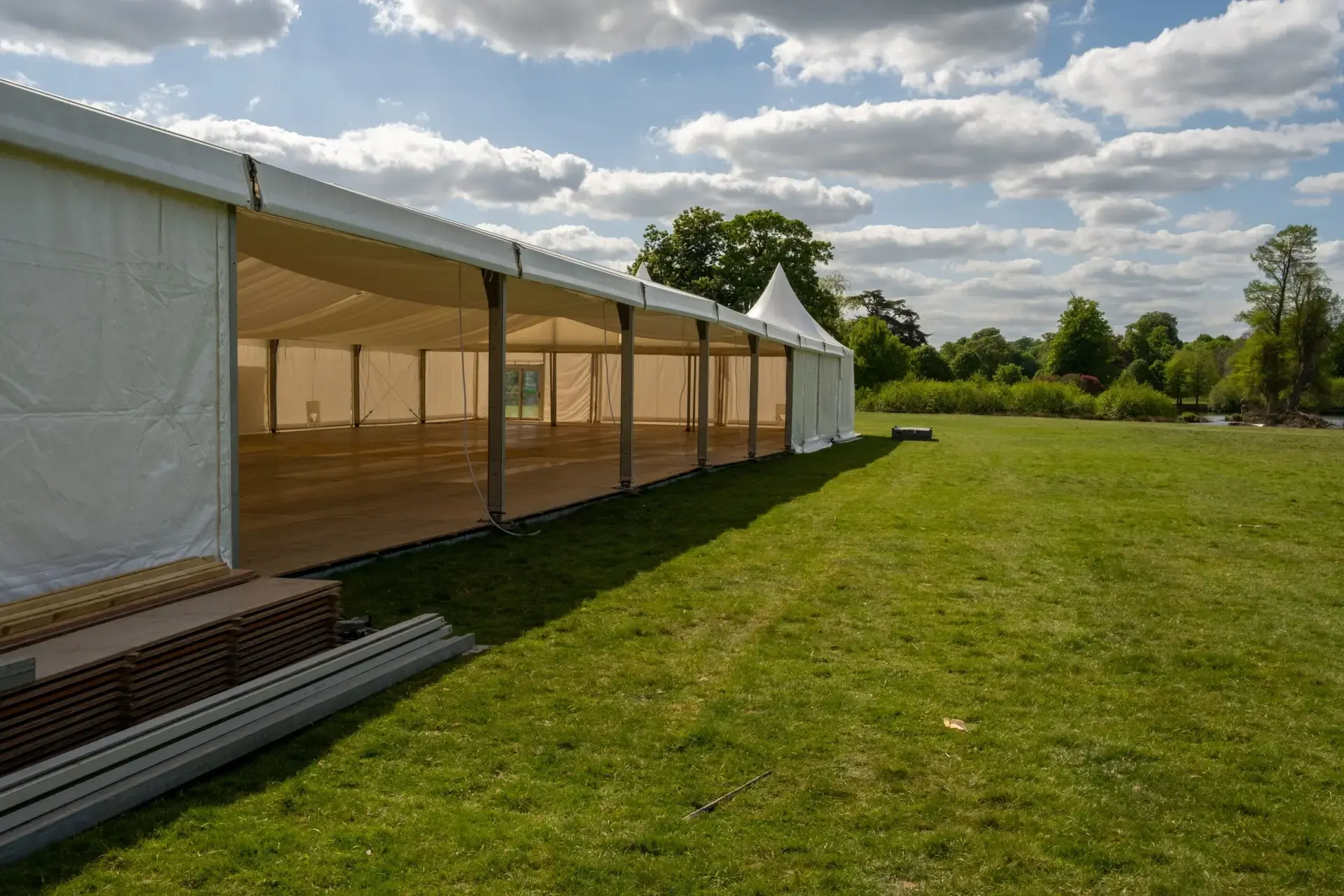
Usually, yes — aluminium clear-span structures are modular by design and engineered to dismantle and re-erect. Whether a specific structure should be relocated depends on its condition: frame integrity, connection wear, membrane life and engineering documentation determine whether a re-build is safe, compliant and economic. A documented structural assessment answers the question before any money is committed.
Relocatability is one of the core reasons organisations buy engineered structures in the first place. But a structure that has stood for years — through wind seasons, UV cycles and the occasional forklift — is not automatically fit to stand somewhere else. This guide covers how the decision is made professionally.
What determines whether a re-build is viable?
- Frame condition. Aluminium extrusions have long service lives, but impact damage, corrosion at dissimilar-metal contacts, and elongated pin holes at connections all compromise load paths. The frame is the asset; its condition drives the decision.
- Connections and hardware. Plates, pins, bracing cables and tensioning hardware wear faster than the frame and are inspected — and commonly replaced — as a set.
- Membranes. PVC roof and wall membranes are consumables on a 15–25 year horizon. A sound frame with tired membranes is still a strong re-build candidate: membranes are replaceable at a fraction of new-structure cost.
- Documentation. Re-certifying a structure for a new site requires engineering evidence of what the structure is. Original drawings and specifications make re-certification straightforward; their absence makes it harder, sometimes decisively so.
- The new site and use. Wind region, ground conditions and intended use at the destination may differ from the original site — the structure must be re-certified for where it is going, not where it has been. See how approvals and certification work.
How the process works
| Stage | What happens | Outcome |
|---|---|---|
| Inspection | Frame, connections, membranes, anchorage and documentation assessed on site | Written structural integrity assessment |
| Dismantle & removal | Sequenced dismantle; components catalogued, protected and removed | Site cleared; asset preserved |
| Decision | Assessment reviewed against the intended new site and use | Re-establish · part-salvage · replace |
| Re-establishment | Re-engineering and re-certification for the new location; re-installation | Compliant structure, operational again |
PCS delivers this as a single service — inspection, removal, assessment and either re-build consulting or a replacement quotation — through the removal, assessment & relocation service.
When is replacement the better decision?
Replace rather than relocate when frame damage or corrosion compromises load paths, when membrane replacement approaches new-structure cost, when no engineering documentation exists to support re-certification, or when the new use demands a different span, height or specification. In these cases, serviceable components can often still be salvaged into the new solution.
The economics deserve the same discipline as a new purchase: a marginal re-build that fails certification or requires component-by-component replacement can cost more than a new European-engineered structure with a full service life ahead of it — see what structures cost in Australia for the comparison baseline.
The owner's position
An owned structure is an asset either way. If it holds its integrity, relocation preserves the capital already invested. If it does not, a documented assessment converts an uncertain liability into a clear commercial decision — and the removal, salvage and replacement can be handled by one accountable contractor rather than three. Either outcome is better than the common alternative: paying to move a structure nobody has assessed, and discovering the answer during re-installation.